Chennai residential society cuts freshwater use by over half by optimizing waste water systems
Process upgrades and monitoring push reuse above half and secure green recognition.
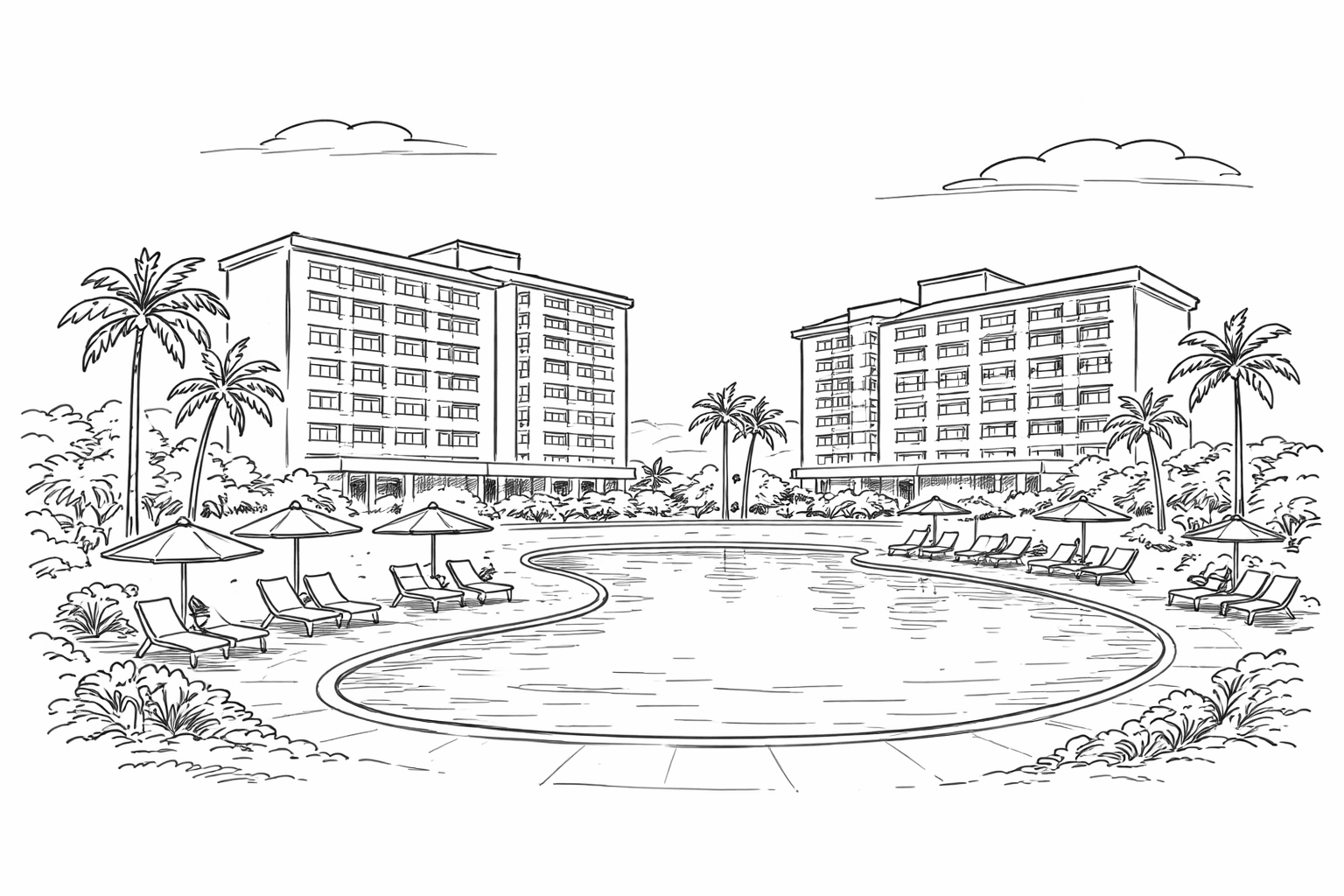
Our client is a gated community of 172 apartments located in Sholinganallur that already had a Total Water Management System installed which helps them in Freshwater Monitoring, Tanker Monitoring and Recycled water Monitoring. Using the same, they were reusing their wastewater, even without a city sewer line, to its maximum capacity. Post the 2015 Chennai floods, this residential society faced a multitude of challenges with respect to its existing water and wastewater management.
Challenge
The Sewage Treatment Plant, which was following an Moving Bed Biofilm Reactor (MBBR) process was not operated properly. MBBR is a biological wastewater treatment process that uses suspended plastic carrier media to support biofilm growth for the removal of organic matter and nutrients. The improper use led to poor quality of treated water and raised major concerns among the residents. This led to an increase in dependency on Fresh water and increased its water bill. They also faced a huge challenge in asset management due to frequent failures of electro-mechanical equipment. In December 2015 the residential society decided to upgrade to a Smart Water Management system with the help of Real-Time Monitoring to improve their existing water management system.
Solution
Greenvironment’s Real-Time Monitoring system for sewage treatment enables real time data collection, analysis and control tools using Internet Of Things (IoT) and a full array of smart sensors. Using analytics, the system identifies potential issues and helps in proactive decision making to further improve the reliability and the performance of a plant.
At the residential society, our team made the following improvements:
- Replaced the MBBR process with the Extended Aeration process and followed proper operating guidelines, resulting in significant improvement in plant efficiency and treated water quality.
- Implemented an automated chlorine-based disinfection system in the freshwater system to ensure treated water quality fit for reuse. The water quality was further regulated by ORP and supported by monthly bacterial strip testing, to detect and control E. coli and coliform presence. Reused STP treated water for toilet flushing, gardening, cleaning of communal areas, in-house car washing, and groundwater recharge with improved treated water quality.
- Introduced an airlift system for recirculation of activated sludge to promote microbial growth in wastewater.
- Implemented backwashing of filters using treated water instead of filter feed water, improving the health and life cycle of the filter media.
- Introduced a bar screen to prevent foreign particles from entering the system.
Outcome
Their Water Footprint and dependency on Fresh water reduced across the board, post the implementation of Real Time monitoring of their Water Utilities, Over 53% of their daily consumption was now fulfilled through recycled water which led to a 30% savings on water spent. An Annual Savings of Rs 20 Lakhs was achieved in the year 2019-2020 on Fresh Water, by operating the STP at a high Efficiency of 90% Overall efficiency all without compromising on the quality of the treated water.
The Tamil Nadu Pollution Control Board bestowed the prestigious Green Awards to The Central Park South in June, 2019 for their tremendous efforts towards Water and Waste Management and Water savings.